 Obverse
 Reverse
United Kingdom · 91.67% gold
Victoria Gold Sovereign 1838–1901
Queen Victoria's gold sovereigns, struck from 1838 to 1901 with three portraits and two reverses.
Struck in most years of Queen Victoria's reign, at London and from 1855 also at the Australian mints (which have their own page).
Melt value today
$910.63
- Face value
- £1
- Gold content
- 0.2354 oz
- Gold spot
- $3,867.96 /oz
Live spot · Metals.dev
How this melt value is calculated
- 1. Gold in the coin7.9881 g × 0.9167 ÷ 31.1034768 = 0.2354 oz (7.323 g pure gold)
- 2. Gold price$3,867.96 per troy ounce
- 3. Melt value0.2354 oz × $3,867.96 = $910.63
Premium evaluator
Enter the price a dealer is asking to compare it with the melt value of $910.63 per coin.
Build a stack to total your gold and silver. Stored only in this browser.
About the Victoria Gold Sovereign
Victoria's accession in 1837 ended the union with Hanover, so both sides of the sovereign changed. William Wyon's Young Head was paired with a crowned shield of arms within a wreath, the 'shield back', struck in London every year from 1838 to 1874 apart from 1840 and 1867.
Pistrucci's St George and the Dragon returned in 1871, and the two reverses were struck side by side until 1874 in London and until 1887 in Australia.
The Young Head gave way to Joseph Boehm's Jubilee Head in 1887, which was criticised and replaced in 1893 by Thomas Brock's Old, or Veiled, Head. The weight and fineness never changed.
Varieties
- Young Head (1838–1887)Shield reverse 1838–1874 (to 1887 in Australia); St George from 1871.
- Jubilee Head (1887–1893)Boehm's crowned, veiled portrait; St George reverse.
- Old (Veiled) Head (1893–1901)Brock's portrait; St George reverse.
How to identify it
- Young Head (1838–1887): a young, uncrowned portrait with the hair tied back; reverse either a crowned shield in a wreath or St George.
- Jubilee Head (1887–1893): a small crown perched on a veiled head; St George reverse.
- Old or Veiled Head (1893–1901): an older portrait wearing a crown and a veil; St George reverse.
- 22.05 mm across and about 7.99 g, with a milled edge. No denomination is written on the coin.
- A small mint mark on the reverse marks a branch mint. Coins marked S, M or P (Australia) and SA (Pretoria) have their own pages.
Quick identification & value
- How much gold is in this sovereign?
- 0.2354 troy ounce (7.32 g) of pure gold, in a coin weighing 7.988 g of 22-carat gold. Every sovereign since 1817 was struck to the same standard.
- Is a shield-back sovereign worth more gold than a St George one?
- No. Both reverses were struck to the same weight and fineness; the design does not change the gold content.
- Is melt value the same as collector value?
- No. Melt value is only the value of the gold. Scarce dates, mint marks and well-preserved examples can sell for much more to collectors, while a dealer buying for gold content may offer somewhat less than melt.
- Does circulation wear affect the value?
- Slightly. The figures here use the official weight when struck. Heavily worn coins have lost a little metal, so their real gold content is modestly lower — and wear usually matters far more to collector value.
Related coins and tools
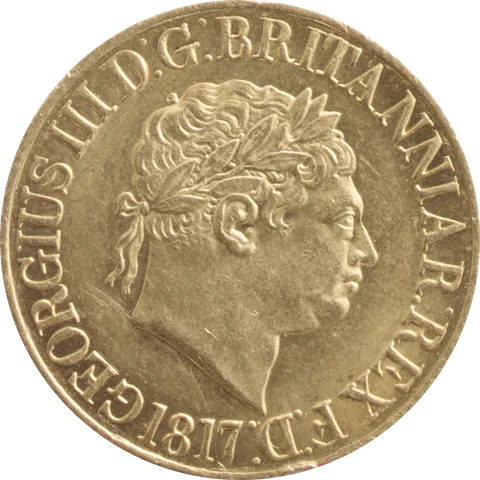
George III, George IV and William IV Gold Sovereign
1817–18370.2354 oz Au
$910.63Face value £1
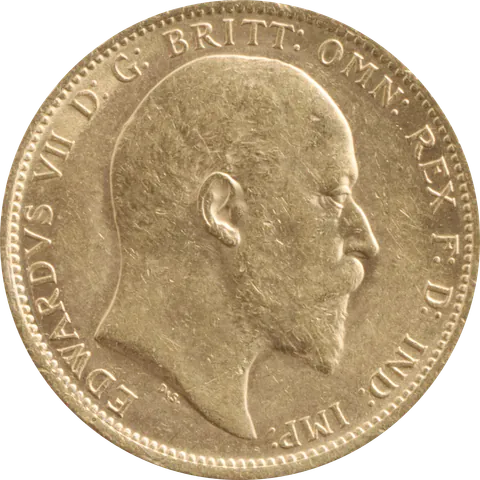
Edward VII Gold Sovereign
1902–19100.2354 oz Au
$910.63Face value £1
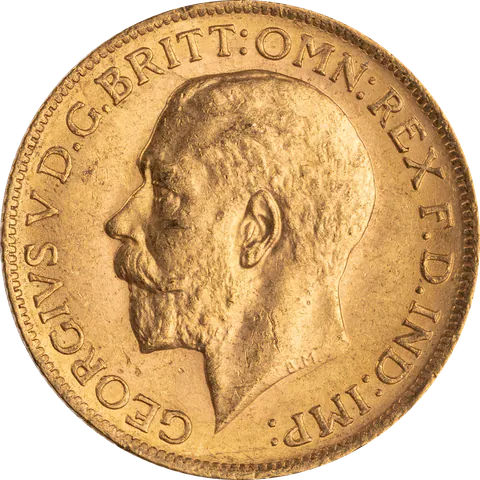
George V Gold Sovereign
1911–19320.2354 oz Au
$910.63Face value £1
Elizabeth II Gold Sovereign
1957–20220.2354 oz Au
$910.63Face value £1
Sources & methodologyThe Royal Mint, Numista, Wikipedia
Specifications verified against
- Wikipedia: Sovereign (British coin)Victoria's Young Head 1838–1887, Jubilee Head 1887, Old Head 1893; shield back 1838–1874; St George restored 1871
- Numista: 1 Sovereign - Victoria (1st portrait; Shield) - United KingdomYoung head with shield reverse, 1838–1874
- Numista: 1 Sovereign - Victoria (3rd portrait) - United KingdomOld (veiled) head, 1893–1901, Thomas Brock
- The Royal Mint: 1838–74 Queen Victoria Young Head SovereignYoung Head sovereign 1838–1874, 7.98 g, 22 carat gold
Method
Melt values are calculated from these specifications and the price of gold and the other metals in its alloy; no value is stored or copied from another site. See the methodology and data sources.