 Obverse
 Reverse
Germany · 62.5% silver
West German 5 Deutsche Mark Silver 1951–1974
The West German 5 Deutsche Mark of 1951–1974 weighs 11.2 g in .625 silver, which is 7 g (about 0.225 troy oz) of fine silver.
Melt value today
$10.68
- Face value
- 5 DM
- Silver content
- 0.2251 oz
- Silver spot
- $47.22 /oz
Live spot · Metals.dev
silver $10.63 + copper (37.5%) $0.0563
How this melt value is calculated
- 1. Silver in the coin11.20 g × 0.625 ÷ 31.1034768 = 0.2251 oz (7.000 g pure silver)
- 2. Silver price$47.22 per troy ounce
- 3. Silver value0.2251 oz × $47.22 = $10.63
- 4. Copper value4.200 g ÷ 453.59237 g per lb × $6.08 = $0.0563
- 5. Melt value$10.63 + $0.0563 = $10.68
Premium evaluator
Enter the price a dealer is asking to compare it with the melt value of $10.68 per coin.
Build a stack to total your gold and silver. Stored only in this browser.
About the West German 5 Deutsche Mark Silver
The Federal Republic introduced a .625 silver 5 DM coin in 1951. It weighs 11.2 g and is 29 mm across.
Cupronickel-clad nickel replaced silver in the 5 DM in 1975; the later coin has a different design and weighs 10 g.
How to identify it
- One side shows the value, the date and BUNDESREPUBLIK DEUTSCHLAND; the other shows the German eagle.
- Dates 1951 to 1974 are silver. Circulation 5 DM coins dated 1975 to 2001 contain no silver.
- A silver coin weighs 11.2 g; the later coin weighs 10 g.
Quick identification & value
- How much silver is in a 5 DM coin from 1951 to 1974?
- 11.2 g at 62.5% silver, which is 7 g or about 0.225 troy oz of fine silver.
- Are later 5 DM coins silver?
- No. From 1975 the circulation 5 DM was struck in cupronickel-clad nickel.
- Is melt value the same as collector value?
- No. Melt value is only the value of the silver. Scarce dates, mint marks and well-preserved examples can sell for much more to collectors, while a dealer buying for silver content may offer somewhat less than melt.
- Does circulation wear affect the value?
- Slightly. The figures here use the official weight when struck. Heavily worn coins have lost a little metal, so their real silver content is modestly lower — and wear usually matters far more to collector value.
Related coins and tools
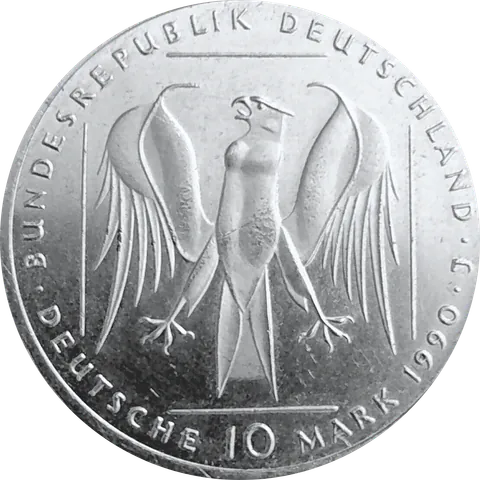
West German 10 Deutsche Mark Silver Commemorative
1972, 1987–19970.3115 oz Ag
$14.78Face value 10 DM
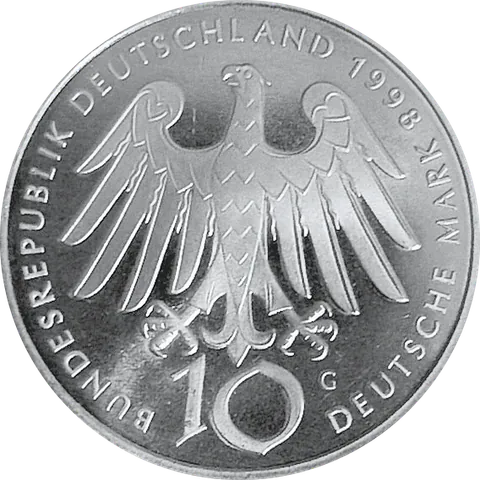
German 10 Deutsche Mark Silver Commemorative
1998–20010.4610 oz Ag
$21.78Face value 10 DM
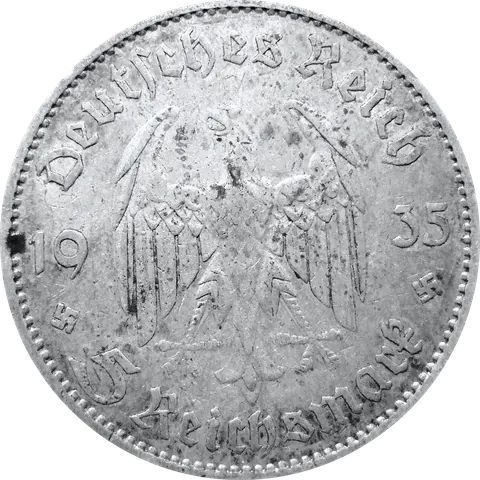
German 5 Reichsmark Silver
1934–19390.4016 oz Ag
$18.98Face value 5 Reichsmark
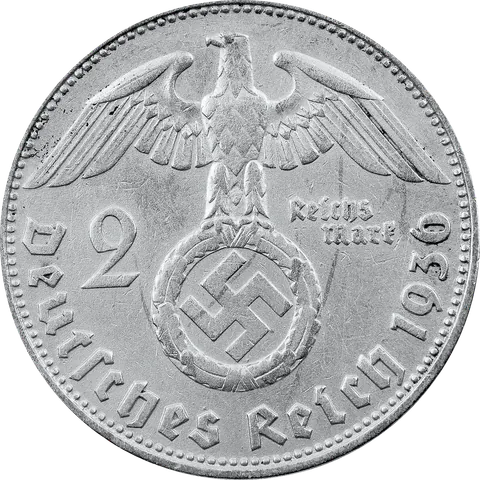
German 2 Reichsmark Silver
1933–19390.1608 oz Ag
$7.63Face value 2 Reichsmark
Sources & methodologyNGC, Numista, Wikipedia
Specifications verified against
- Wikipedia: Deutsche MarkDM 5 1951–1974: 29 mm, 11.20 g, silver 62.5% / copper 37.5%; cupronickel from 1975
- Numista: 5 Deutsche Mark - Federal Republic of GermanySilver .625 (copper .375), 11.2 g, mintages 1951–1974
- NGC: Germany - Federal Republic 5 Mark KM 112.1 Prices & ValuesKM 112.1 dated 1951–1974
Method
Melt values are calculated from these specifications and the price of silver and the other metals in its alloy; no value is stored or copied from another site. See the methodology and data sources.
Image
- Obverse and reverse: Peter Buch. CC0, via Wikimedia Commons. Source · CC0
- Background removed and resized, and its colour evened to a neutral silver tone; otherwise unaltered.