 Obverse
 Reverse
United States · 90% gold
Liberty Head Gold Dollar 1849–1854
The Liberty Head gold dollar, or Type 1 gold dollar, is the United States $1 gold coin designed by James B. Longacre and struck from 1849 to 1854.
Known to collectors as the Type 1 gold dollar. The Indian Princess design replaced it during 1854.
Melt value today
$187.14
- Face value
- $1
- Worth
- 187× face
- Gold spot
- $3,867.96 /oz
Live spot · Metals.dev
gold $187.13 + copper (10%) $0.0022
How this melt value is calculated
- 1. Gold in the coin1.672 g × 0.9 ÷ 31.1034768 = 0.0484 oz (1.505 g pure gold)
- 2. Gold price$3,867.96 per troy ounce
- 3. Gold value0.0484 oz × $3,867.96 = $187.13
- 4. Copper value0.167 g ÷ 453.59237 g per lb × $6.07 = $0.0022
- 5. Melt value$187.13 + $0.0022 = $187.14
Premium evaluator
Enter the price a dealer is asking to compare it with the melt value of $187.14 per coin.
Build a stack to total your gold and silver. Stored only in this browser.
About the Liberty Head Gold Dollar
Congress authorized the gold dollar in 1849, after the California Gold Rush greatly increased the supply of gold. The first pieces were struck in May 1849.
Longacre's Type 1 shows a Liberty head with a coronet, much like his double eagle. At 12.7 mm it is the smallest-diameter coin the United States has issued, and it proved easy to lose.
In 1854 the coin was made thinner and wider with a new Indian Princess design; the weight and fineness did not change, so every gold dollar holds the same gold.
How to identify it
- Obverse: Liberty facing left, wearing a coronet inscribed LIBERTY, surrounded by thirteen stars.
- Reverse: the denomination 1 DOLLAR and the date inside a wreath, with UNITED STATES OF AMERICA around it; the date is on the reverse.
- 12.7 mm across and about 1.67 g. A gold dollar showing an Indian princess in a feathered headdress is the later 14.3 mm type.
- Gold dollars were popular in jewellery, so a mounted or holed piece may weigh less.
Quick identification & value
- How much gold is in a Type 1 gold dollar?
- 0.04837 troy oz of pure gold: 1.672 g at 90% gold, 10% copper.
- Does a Type 1 gold dollar hold the same gold as the later types?
- Yes. All three types were struck to the same weight and fineness; only the size and design changed.
- Is melt value the same as collector value?
- No. Melt value is only the value of the gold. Scarce dates, mint marks and well-preserved examples can sell for much more to collectors, while a dealer buying for gold content may offer somewhat less than melt.
- Does circulation wear affect the value?
- Slightly. The figures here use the official weight when struck. Heavily worn coins have lost a little metal, so their real gold content is modestly lower — and wear usually matters far more to collector value.
Related coins and tools
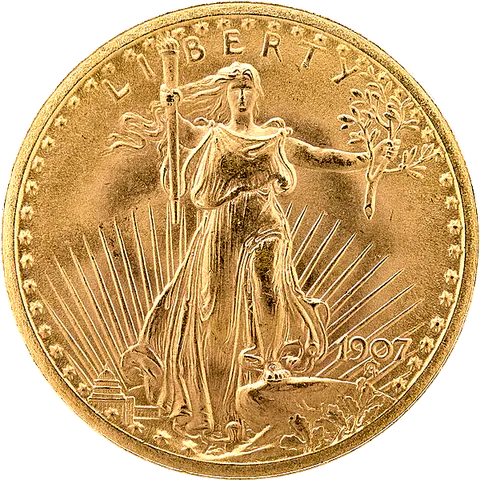
Saint-Gaudens Double Eagle
1907–19330.9675 oz Au
$3,742.30187× face value
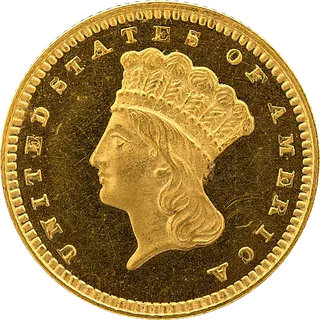
Indian Princess Gold Dollar
1854–18890.0484 oz Au
$187.14187× face value
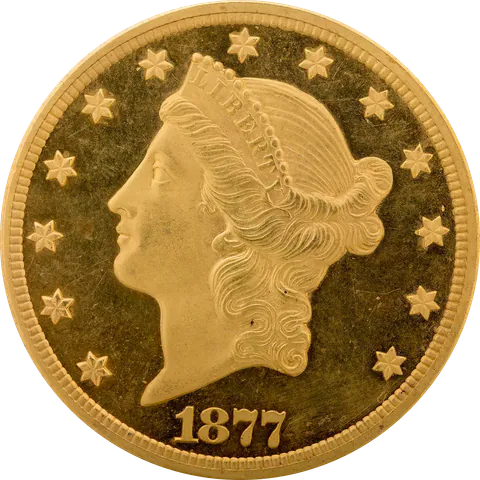
Liberty Head Double Eagle
1850–19070.9675 oz Au
$3,742.30187× face value
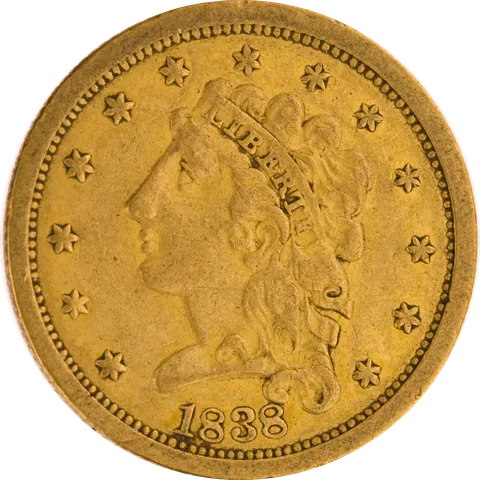
Classic Head Quarter Eagle
1837–18390.1209 oz Au
$467.79187× face value
Sources & methodologyPCGS, Numista, Wikipedia
Specifications verified against
- Wikipedia: Gold dollar1849–1889; 1.672 g; 90% gold 10% copper; 0.04837 troy oz; Type 1 12.7 mm, Types 2 and 3 14.3 mm; designer Longacre
- PCGS: Gold Dollar - PCGS CoinFactsType I 1849–1854, Type II 1854–1856, Type III 1856–1889; 1.672 g; 90% gold 10% copper; 0.048375 troy oz
- Numista: 1 Dollar "Liberty Head" (Type 1) - United StatesType 1, 1849–1854, 1.672 g, 13 mm, gold .900
Method
Melt values are calculated from these specifications and the price of gold and the other metals in its alloy; no value is stored or copied from another site. See the methodology and data sources.
Image
- Obverse and reverse: National Numismatic Collection, National Museum of American History (Smithsonian). Photo: Jaclyn Nash. Public domain; file from the Smithsonian's image service (also on Wikimedia Commons). Source · Public domain
- Background removed and resized; otherwise unaltered.