 Obverse
 Reverse
Netherlands · 94.5% silver
Dutch ½ Gulden 1846–1919
The Dutch ½ gulden of 1846–1919 weighs 5 g in .945 silver, which is 0.1519 troy ounces of fine silver.
Not struck every year: Willem II 1846–1848, Willem III between 1850 and 1868, Wilhelmina 1898 and 1904–1919.
Melt value today
$7.18
- Face value
- ½ gulden
- Silver content
- 0.1519 oz
- Silver spot
- $47.22 /oz
Live spot · Metals.dev
silver $7.17 + copper (5.5%) $0.0037
How this melt value is calculated
- 1. Silver in the coin5.00 g × 0.945 ÷ 31.1034768 = 0.1519 oz (4.725 g pure silver)
- 2. Silver price$47.22 per troy ounce
- 3. Silver value0.1519 oz × $47.22 = $7.17
- 4. Copper value0.275 g ÷ 453.59237 g per lb × $6.08 = $0.0037
- 5. Melt value$7.17 + $0.0037 = $7.18
Premium evaluator
Enter the price a dealer is asking to compare it with the melt value of $7.18 per coin.
Build a stack to total your gold and silver. Stored only in this browser.
About the Dutch ½ Gulden
The half gulden was struck in .945 silver at exactly half the weight of the gulden. It was issued under Willem II, Willem III and Wilhelmina.
From 1921 the coin was struck in .720 silver, and the denomination ended in 1930.
How to identify it
- 22 mm across and 5 g, with a reeded edge.
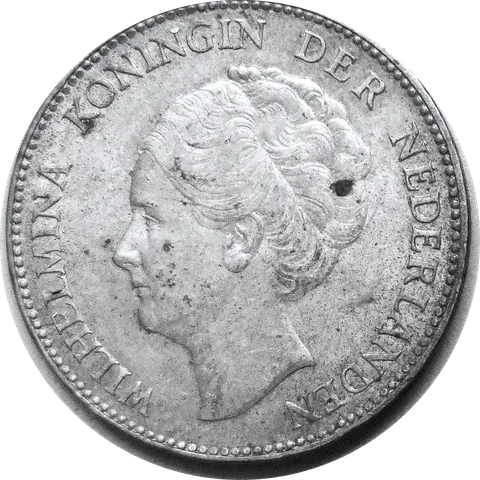
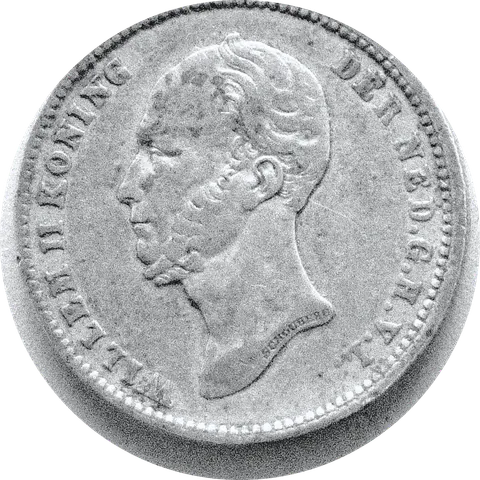
- The obverse shows the reigning king or queen; the reverse shows the crowned Dutch arms with the value ½ G.
- Half guldens dated 1921–1930 are .720 silver.
Quick identification & value
- How much silver is in a Dutch half gulden dated 1919 or earlier?
- It weighs 5 g at .945 fineness, so it contains 4.725 g or about 0.1519 troy ounces of fine silver.
- Are all half guldens the same silver?
- No. Coins dated 1846–1919 are .945 silver; those dated 1921–1930 are .720.
- Is melt value the same as collector value?
- No. Melt value is only the value of the silver. Scarce dates, mint marks and well-preserved examples can sell for much more to collectors, while a dealer buying for silver content may offer somewhat less than melt.
- Does circulation wear affect the value?
- Slightly. The figures here use the official weight when struck. Heavily worn coins have lost a little metal, so their real silver content is modestly lower — and wear usually matters far more to collector value.
Related coins and tools
Dutch 1 Gulden
1954–19670.1505 oz Ag
$7.13Face value 1 gulden
Dutch ½ Gulden
1921–19300.1157 oz Ag
$5.48Face value ½ gulden
Dutch 1 Gulden
1922–19450.2315 oz Ag
$10.97Face value 1 gulden
Dutch 25 Cents Silver (Kwartje)
1848–19450.0736 oz Ag
$3.49Face value 25 cents
Sources & methodologyNGC, Wikipedia
Specifications verified against
- Wikipedia: Half guilder coin (Netherlands)½ guilder 1846–1919: 5 g, 22 mm, silver .945
- NGC: Netherlands 1/2 Gulden KM 147 (1910–1919)Fineness 0.9450, 5.0000 g, ASW 0.1519 oz, 22 mm
Method
Melt values are calculated from these specifications and the price of silver and the other metals in its alloy; no value is stored or copied from another site. See the methodology and data sources.
Image
- Obverse and reverse: Rijksmuseum, Amsterdam, KOG-MP-1-2309A (Nederland, ½ gulden, 1868). Public domain. Source · Public domain
- Background removed and resized, and its colour evened to a neutral silver tone; otherwise unaltered.