 Obverse
 Reverse
United States · 90% silver
Washington Quarter 1932–1964
Washington quarters dated 1932 to 1964 are 90% silver; those dated 1965 and later are copper-nickel clad.
No quarters were struck in 1933.
Melt value today
$8.55
- Face value
- $0.25
- Worth
- 34.2× face
- Silver spot
- $47.22 /oz
Live spot · Metals.dev
silver $8.54 + copper (10%) $0.0084
How this melt value is calculated
- 1. Silver in the coin6.25 g × 0.9 ÷ 31.1034768 = 0.1808 oz (5.625 g pure silver)
- 2. Silver price$47.22 per troy ounce
- 3. Silver value0.1808 oz × $47.22 = $8.54
- 4. Copper value0.625 g ÷ 453.59237 g per lb × $6.08 = $0.0084
- 5. Melt value$8.54 + $0.0084 = $8.55
Premium evaluator
Enter the price a dealer is asking to compare it with the melt value of $8.55 per coin.
Build a stack to total your gold and silver. Stored only in this browser.
About the Washington Quarter
The Washington quarter was introduced in 1932. It stayed 90% silver until the end of silver production with coins dated 1964, after which the Coinage Act of 1965 replaced the alloy with copper-nickel bonded to a copper core.
These are among the most commonly found silver coins in the United States and a staple of "junk silver" — coins traded for their silver content rather than as collectibles.
How to identify it
- Dated 1964 or earlier (1932, or 1934–1964).
- Look at the edge: a 90% silver quarter is a uniform silver colour, while clad quarters from 1965 on show the copper core as a reddish-brown stripe.
- Weighs 6.25 grams; a clad quarter weighs 5.67 grams.
Quick identification & value
- What years of quarters are silver?
- U.S. quarters made for circulation and dated 1964 or earlier are 90% silver. Quarters dated 1965 or later are copper-nickel clad and contain no silver, apart from special silver versions sold to collectors.
- Is a 1965 quarter silver?
- No. Quarters dated 1965 and later were struck in copper-nickel clad. The last 90% silver circulation quarters are dated 1964.
- How can I tell a silver quarter from a clad one?
- Check the date first: 1964 or earlier means silver. The edge confirms it — solid silver colour with no copper-coloured stripe — and a silver quarter weighs 6.25 grams against 5.67 grams for a clad one.
- How much silver is in a Washington Quarter?
- 0.1808 troy ounces of pure silver when struck: 6.25 grams × 0.9 fineness ÷ 31.1034768 grams per troy ounce.
- Is melt value the same as collector value?
- No. Melt value is only the value of the silver. Scarce dates, mint marks and well-preserved examples can sell for much more to collectors, while a dealer buying for silver content may offer somewhat less than melt.
Related coins and tools
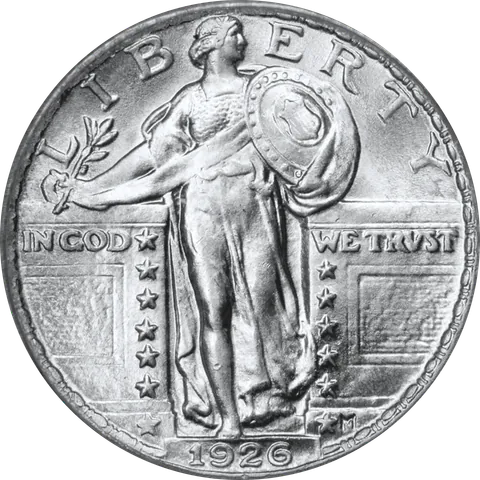
Standing Liberty Quarter
1916–19300.1808 oz Ag
$8.5534.2× face value
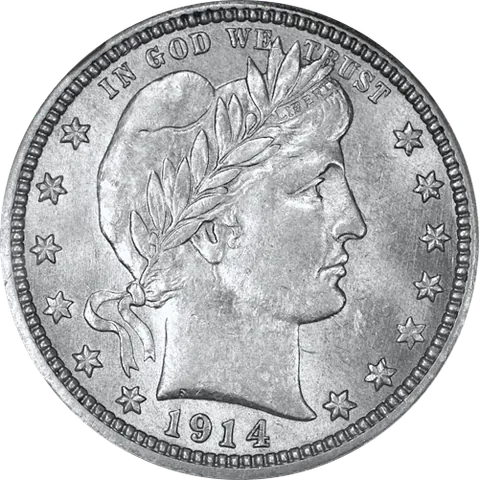
Barber Quarter
1892–19160.1808 oz Ag
$8.5534.2× face value
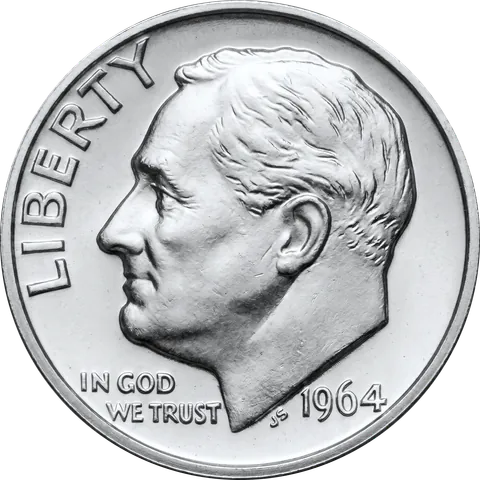
Roosevelt Dime
1946–19640.0723 oz Ag
$3.4234.2× face value

1964 Kennedy Half Dollar
19640.3617 oz Ag
$17.0934.2× face value
Sources & methodologyNGC, Wikipedia
Specifications verified against
- NGC: Washington Quarter melt value and specificationsWeight, composition and actual silver weight
- Wikipedia: Washington quarterYears struck, 6.25 g and 90% silver before 1965, no 1933 issue
- Wikipedia: Quarter (United States coin)Silver and clad compositions and weights
Method
Melt values are calculated from these specifications and the price of silver and the other metals in its alloy; no value is stored or copied from another site. See the methodology and data sources.
Image
- Obverse: Generated illustration. Not a photograph of a real coin. · Owner-supplied illustration
- Reverse: Photo: Amfeli, CC BY 4.0, via Wikimedia Commons. Source · CC BY 4.0
- The obverse is an illustration, not a photograph of a real coin. Verified against: Photograph of a 1954 Washington quarter (Wikimedia Commons) and the Washington quarter design description (Wikipedia, citing the U.S. Mint). Checked on the obverse: Washington head facing left; LIBERTY around the top; IN GOD WE TRUST in two lines at lower left; date 1964 at the bottom; designer's initials on the neck truncation; no mint mark on this side, correct for 1932 to 1964. Obverse only; the reverse shown is a photograph.
- Photograph: background removed and resized, and its colour evened to a neutral silver tone; otherwise unaltered.