 Obverse
United States · 99.95% platinum
American Platinum Eagle 1 oz 1997–present
The one-ounce American Platinum Eagle is a United States bullion coin issued since 1997 with a $100 face value.
Proof coins have been issued every year since 1997; bullion-finish coins were not issued from 2009 to 2013 or in 2015. Fractional sizes ended in 2008 and are not covered by this record.
Melt value today
$1,454.29
- Face value
- $100
- Worth
- 14.5× face
- Platinum spot
- $1,454.29 /oz
Live spot · Metals.dev Simulate spot covers gold and silver; platinum always uses the live price.
How this melt value is calculated
- 1. Platinum in the coin1.0000 oz guaranteed by the mint
- 2. Platinum price$1,454.29 per troy ounce
- 3. Melt value1.0000 oz × $1,454.29 = $1,454.29
The issuing mint specifies a content of 1 troy ounce of fine platinum. Gross weight × fineness gives 1.0000 oz (31.12 g × 0.9995), which differs only by rounding in the published weight; the guaranteed figure is used.
Premium evaluator
Enter the price a dealer is asking to compare it with the melt value of $1,454.29 per coin.
Build a stack to total your gold and silver. Stored only in this browser.
About the American Platinum Eagle 1 oz
The American Platinum Eagle is the official platinum bullion coin of the United States, authorized by Congress in 1996 and first issued in 1997. Its $100 face value is the highest on any United States coin.
It was issued in 1/10, 1/4, 1/2 and 1 oz sizes until 2008; since 2009 only the one-ounce coin has been made. Bullion-finish coins were not issued from 2009 to 2013 or in 2015, but proof coins were struck every year.
Bullion coins keep the same design each year: John Mercanti's Statue of Liberty obverse and Thomas D. Rogers' soaring eagle reverse. Proof coins have changing designs; the metal content is the same.
How to identify it
- Obverse: the face of the Statue of Liberty ('Liberty Looking to the Future').
- Bullion reverse: a soaring eagle, inscribed '.9995 PLATINUM 1 OZ.', with the $100 face value. Proof coins carry different designs that change from year to year.
- 32.7 mm across with a reeded edge; 31.120 g.
- It is platinum, not silver: the same diameter as a one-ounce Gold Eagle and clearly marked PLATINUM.
Quick identification & value
- How much platinum is in a one-ounce American Platinum Eagle?
- One troy ounce of platinum. The coin weighs 31.120 g (1.0005 troy oz) at .9995 fine.
- Does a proof Platinum Eagle contain the same platinum as a bullion one?
- Yes. The finishes and designs differ, but the one-ounce coins share the same weight and fineness.
- Is melt value the same as collector value?
- No. Melt value is only the value of the platinum. Bullion coins normally sell for a premium above it, and some dates or special finishes carry additional collector value.
- Does circulation wear affect the value?
- Rarely for platinum content: bullion coins are not normally circulated, so they keep their full weight. Damage can still reduce what a buyer will pay.
Related coins and tools
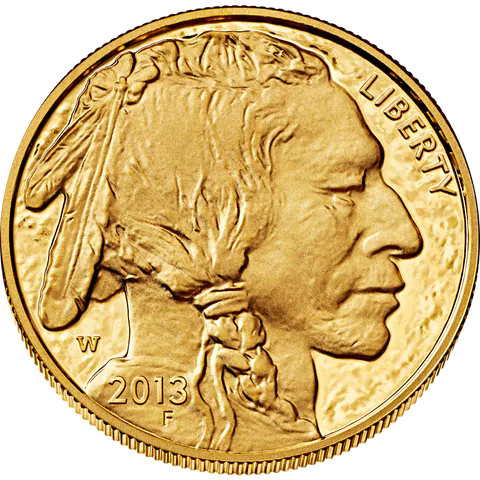
American Gold Buffalo 1 oz
2006–present1.0000 oz Au
$3,862.9077.3× face value
American Palladium Eagle 1 oz
2017–present1.0000 oz Pd
$971.3138.9× face value
American Gold Eagle 1/10 oz
1986–present0.1000 oz Au
$386.4577.3× face value
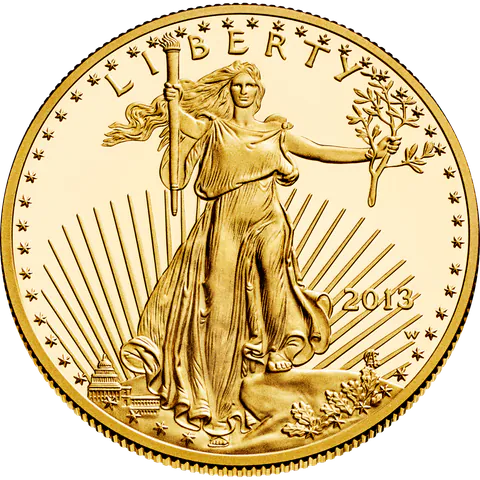
American Gold Eagle 1/4 oz
1986–present0.2500 oz Au
$966.1296.6× face value
Sources & methodologyU.S. Mint, Numista, Wikipedia
Specifications verified against
- Wikipedia: American Platinum Eagle1997–present; 99.95% platinum; $100 (1 troy oz) 32.7 mm, 1.0005 troy oz; bullion not issued 2009–2013 and 2015; designers
- United States Mint: Bullion Coin ProgramsAmerican Eagle platinum bullion: 99.95% platinum, 31.120 g, 32.70 mm, $100; authorized 1996, first issued 1997. Palladium: authorized 2010, first issued 2017
- Numista: 100 Dollars "American Platinum Eagle" (Bullion Coinage) - United StatesCatalogue listing of the $100 one-ounce platinum bullion coin
Method
Melt values are calculated from these specifications and the price of platinum and the other metals in its alloy; no value is stored or copied from another site. See the methodology and data sources.